Math
We summarize the week's scientific breakthroughs every Thursday.
- Life
Life’s origin might illustrate the power of game theory
Game theory math can describe molecular competition and cooperation, perhaps providing clues to the origin of life.
- Computing
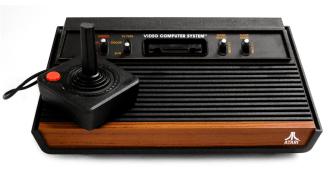
Artificial intelligence conquers Space Invaders, Pong, Q*bert
With a single algorithm, a computer can learn dozens of classic video games, researchers from Google DeepMind in London report.
- Earth
Mineral hunting, mob math and more reader feedback
Readers ask about Earth's most abundant mineral and discuss the notoriously unpredictable behavior of pedestrians.
- Quantum Physics
Top 10 scientific mysteries for the 21st century
Solving the Top 10 scientific mysteries facing the 21st century will not be all fun but could be mostly games.
- Computing
New computer algorithm plays poker almost perfectly
An algorithm optimized to play heads-up limit Texas Hold’em poker will never lose in the long run against any opponent.
- Health & Medicine
Online favorites of 2014
Science News' website traffic reveals the most-read news stories and blog posts of 2014.
- Math
Math to match pedestrian behavior is all about timing
The best-ever simulation of pedestrians moving through a crowd relies on a new formula that encapsulates people’s ability to anticipate collisions.
- Math
Spirals inspire walking aids for people with disabilities
Long admired for their beauty, spirals have inspired a shoe that may help disabled people walk. The shapes make for a better crutch and an entertaining skateboard as well.
- Math
In science, popularity breeds unreliability
Popularity can mean unreliability both in science news coverage and within research itself.
- Math
Reproducing experiments is more complicated than it seems
Statisticians have devised a new way to measure the evidence that an experimental result has really been reproduced.
- Science & Society
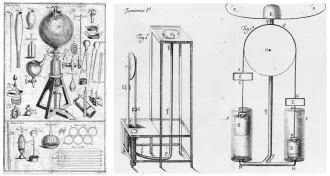
Top 10 science anniversaries in 2014
2014 is a rich year for scientific anniversaries, from the birth of Vesalius to quantum factoring.
- Science & Society
There’s a new way to quantify structure and complexity
A new way to measure structure and complexity can help explain how information sharing among the parts of a system is related to its behaviors on different scales.