Math
We summarize the week's scientific breakthroughs every Thursday.
- Quantum Physics
Light mimics hotel with limitless vacancies
By mimicking a mathematician’s method for creating vacancies in a hotel with an infinite number of rooms, physicists may have found a way of increasing the amount of data that can be carried via light.
- Math
83-year-old math problem solved
An 83-year-old math problem concerning sequences of 1s and –1s has been solved.
- Science & Society
Short memory can be good strategy
Game theory reveals that there’s a limit to the effectiveness of relying on prior results to predict competitors’ behavior.
- Math
Evidence-based medicine lacks solid supporting evidence
Saving science from its statistical flaws will require radical revision in its methods
- Math
Top 10 ways to save science from its statistical self
Saving science from its statistical flaws will require radical revision in its methods.
- Math
Science is heroic, with a tragic (statistical) flaw
Science falls short of its own standards because of the mindless use of ritualistic statistical tests.
- Science & Society
Nash’s mind left a beautiful legacy
The death of game theory pioneer John Nash ends a dramatic story of genius.
- Science & Society
Here’s what game theory says about how to win in semifinals
Game theory informs competitors facing off in a semifinal whether to go all out or save energy for the final.
- Math
Computer program rivals top poker players in complex card game
A computer program held its own against the world’s best heads-up no-limit Texas Hold’em poker players.
- Math
Research can’t be right with ‘Statistics Done Wrong’
Fraud in science gets a lot of attention and condemnation — as it should. But fraud isn't that interesting compared to all the errors that scientists commit unintentionally.
- Science & Society
John Nash, Louis Nirenberg share math’s Abel Prize
John Nash and Louis Nirenberg will receive the 2015 ‘Nobel of mathematics’ for their work on partial differential equations.
- Math
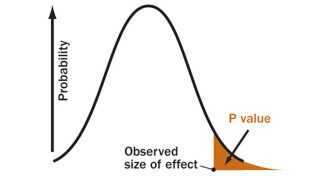
P value ban: small step for a journal, giant leap for science
Peer-reviewed journals have largely insisted on P values as a standard of worthiness. But now the editors of one journal have banned the statistical tool.