Neuroscience
- Neuroscience
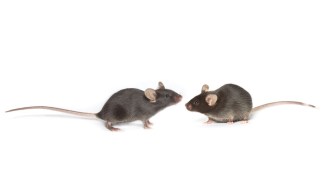
All mice are the same, until they’re not
A new study shows substantial differences in how two closely related mouse strains respond to drugs. It offers new options for linking genes and behavior and may change how scientists think about the similarity of their mouse strains.
- Neuroscience
Year in Review: Obama unveils brain initiative
In April, the president announced an ambitious plan to reveal the human brain’s secrets.
- Neuroscience
Bad memories fade with a short jolt
Research illustrates the vulnerability of the brain’s information storage.
- Life
Solving the mystery of Alzheimer’s start
Molecular evildoers team up to launch neural destruction.
- Neuroscience
Parkinson’s patients drive better with brain stimulation
Patients make fewer errors with a little help from implanted electrodes, at least on a computer.
- Neuroscience
Narcolepsy may be an autoimmune disease
Narcolepsy occurs when wayward immune forces launch an attack on brain cells responsible for wakefulness, a new study suggests.
-
-
- Neuroscience
Concussion-free head blows may still affect brain
Some college athletes who played contact sports had more changes in their brain’s white matter than varsity competitors in less violent games.
- Neuroscience
Lighting up the lightning speed of vesicle formation
While the release of neurotransmitters from vesicles is speedy, we always thought vesicle formation was slow. It turns out that vesicle formation can zip along much faster than we thought.
- Neuroscience
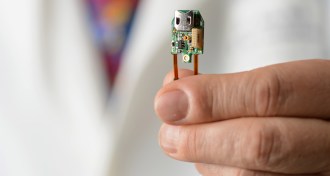
Brain chip enables injured rats to control movements
Prosthesis bypasses damaged area to connect distant neurons.
- Neuroscience
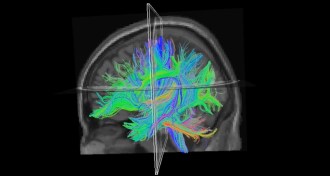
Faulty brain wiring may contribute to dyslexia
Adults with the disorder showed difficulty transmitting information among areas that process language.