Uncategorized
- Climate
Year in review: Global warming continues apace
New climate research showed that the much-discussed warming hiatus never happened, carbon dioxide levels are higher than ever and Earth is heading toward a new normal.
- Science & Society
Year in review: Scientists tackle the irreproducibility problem
In 2015, several research groups reported the extent to which experimental results don't hold up to replication.
- Planetary Science
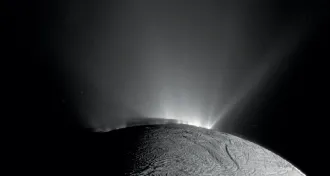
Year in review: Global ocean spans Enceladus
NASA's Cassini spacecraft is offering the best evidence yet that Saturn's moon Enceladus could be a great place to search for extraterrestrial life.
- Life
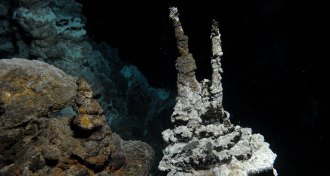
Year in review: Microbe discoveries spur rethink of treetop of life
Microbes discovered in Arctic mud this year could be the closest relatives yet found to the single-celled ancestor that made life so complicated.
- Quantum Physics
Year in review: Quantum spookiness is real
A new version of an experiment proposed in 1964 confirmed a counterintuitive tenet of quantum mechanics.
- Genetics
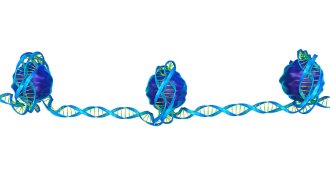
Year in review: Epigenome makes its debut
The Roadmap Epigenomics Project, unveiled in February 2015, is the first in a series of 3-D looks at the human genome.
- Physics
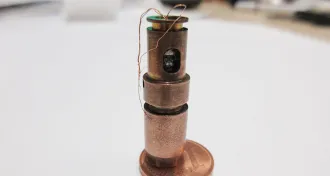
Year in review: Big stride for superconductivity
Compelling but not quite confirmed research in 2015 suggested that hydrogen sulfide is a superconductor at temperatures as high as 203 kelvins.
- Neuroscience
Year in review: Alzheimer’s protein behaves like a prion
Under rare conditions, an Alzheimer’s-related protein may have jumped between people, scientists reported this year.
- Planetary Science
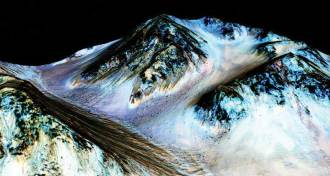
Year in review: Best evidence yet for water on Mars
New data from the Mars Reconaissance Orbiter supported the presence of salty water on Mars.
- Earth
Year in review: Pacific Plate slides over slick layer
Some explosive science offered a glimpse into how tectonic plates slide around Earth’s surface.
- Genetics
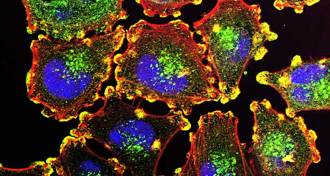
Year in review: Cancer genetics grows up
Researchers looking for mutations linked to cancer have found that not all genetic alterations should be targeted equally.
- Animals
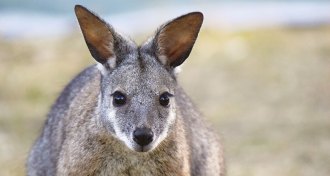
Year in review: Woes of artificial lighting add up for wildlife
Studies published this year add dodging death, flirting and mothering to the tasks that artificial light can discombobulate in wild animals.