Uncategorized
- Genetics
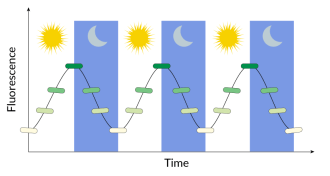
A circadian clock transplant gives E. coli rhythm
Clockworks from algae built into E. coli may hold future jet lag treatment.
- Planetary Science
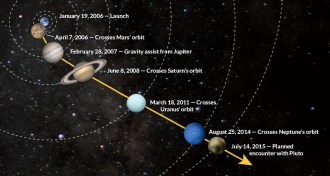
Rendezvous with Pluto
Earth will get its first good look at Pluto and its five known moons when New Horizons sails past on July 14.
- Earth
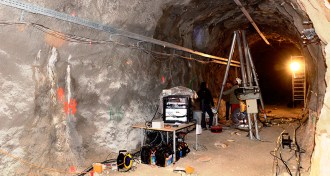
Fluid injection triggers earthquakes indirectly, study finds
An up-close look at artificially triggered quakes suggests that tremors start slow and smooth.
- Life
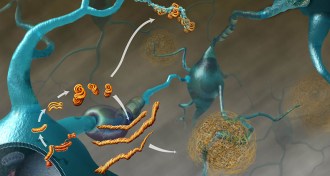
A protein variant can provide protection from deadly brain-wasting
If cannibalism hadn’t stopped, a protective protein may have ended kuru anyway.
- Science & Society
Tech in the classroom foreseen 50 years ago
Fifty years ago, scientists were looking forward to technology in the classroom.
- Anthropology
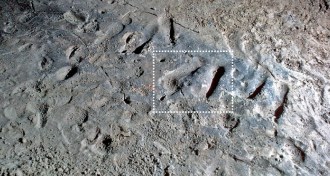
Modern-day trackers reinterpret Stone Age cave footprints
African trackers help researchers interpret ancient human footprints in French caves.
- Animals
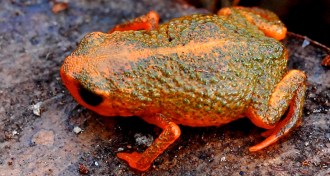
Newly discovered tiny frogs live on islands in the sky
Scientists find seven new species of frogs in southern Brazil, and more could be waiting, they say.
- Anthropology
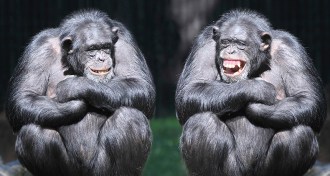
Human laugh lines traced back to ape ancestors
Chimps make laughing faces that speak to evolution of human ha-ha’s.
- Planetary Science
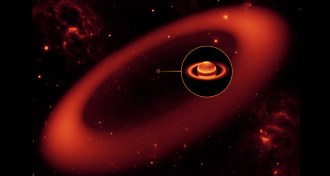
Saturn’s widest ring measured
Saturn has an invisible belt that's nearly 270 times as wide as the giant planet, researchers report.
- Astronomy
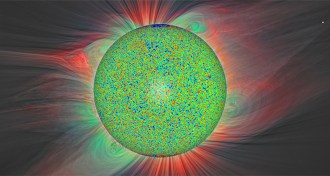
Some of sun’s magnetic fields may act more like forests
A swaying forest of mangrovelike magnetic fields on the sun could be the answer to why the solar atmosphere is millions of degrees hotter than the surface.
- Archaeology
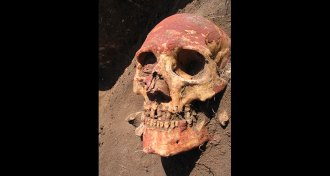
Bronze Age humans racked up travel miles
A new study indicates long journeys and unexpected genetic links in Bronze Age Eurasian cultures.
- Earth
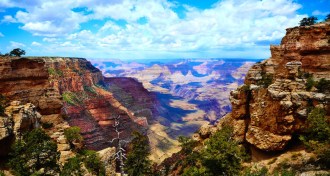
Grand Canyon’s age revised, again
The Grand Canyon is much younger than previous research had suggested, a new study says.