Two tiny genetic shifts helped early humans walk upright
Changes in gene activity reshaped our ancestors’ hips, laying the foundation for bipedalism
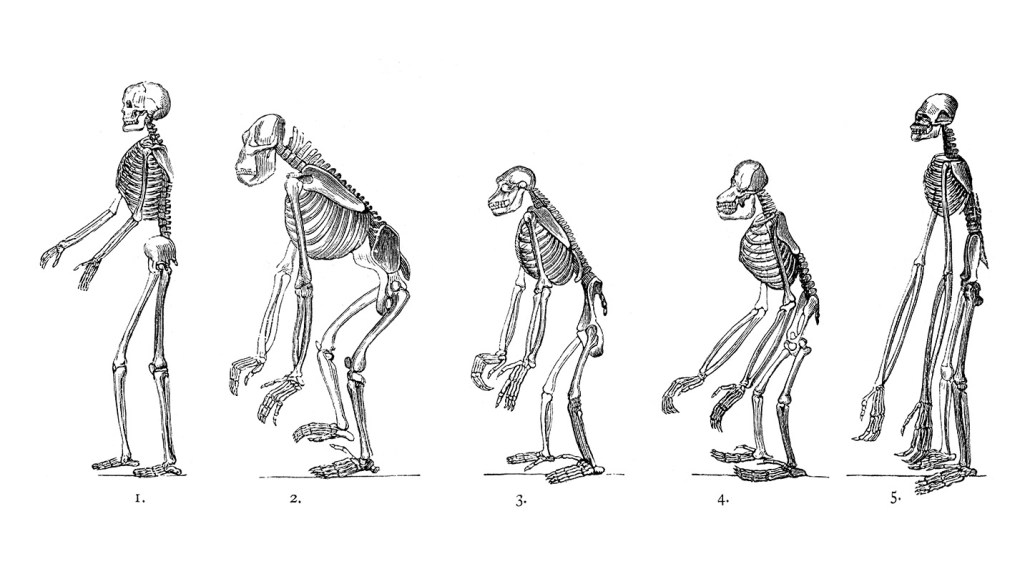
Skeletons of a human, gorilla, chimpanzee, orangutan and gibbon stand next to one another in this anatomical sketch. Scientists have uncovered two genetic shifts in humans that differentiate the pelvis from those of our primate relatives, allowing us to walk upright.
Grafissimo/DigitalVision Vectors/Getty Images Plus