Scientists have long thought that the surface atoms of a solid fit together snugly and stably, like floor tiles. Now they’re finding that surface atoms of copper–and maybe other materials–roam randomly and widely within their orderly grid.
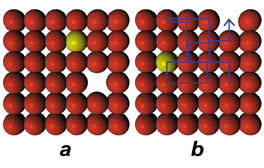
The findings, from independent teams in the Netherlands and New Mexico, may shed light on how materials form layers on other materials.