Evolution
-
- Anthropology
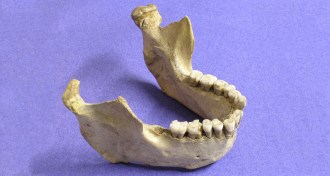
Fossil teeth flesh out ancient kids’ varied growth rates
X-ray technique sheds light on hominids’ developmental variety.
- Genetics
Ancient East Asians mixed and mingled multiple times with Neandertals
East Asians’ ancestors interbred with Neandertals more than once, explaining why modern East Asians carry more Neandertal DNA than Europeans do, two studies suggest.
- Anthropology
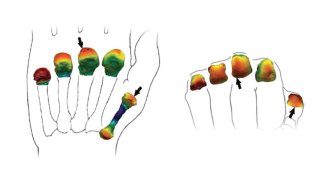
Scans tell gripping tale of possible ancient tool use
South African fossils contain inner signs of humanlike hands, indicating possible tool use nearly 3 million years ago.
- Humans
Year in review: Old humans reveal secrets
DNA of the oldest modern humans is rewriting the prehistories of Europe, Siberia and the Americas.
- Humans
Oldest human DNA narrows time of Neandertal hookups
A 45,000-year-old Siberian bone provides genetic clues about the timing of interbreeding between ancient humans and Neandertals.
- Health & Medicine
Feedback
Readers discuss methods to prevent sepsis and whether genes are thrifty, while Tina Saey clears up some confusion regarding Ebola's airborne status.
- Archaeology
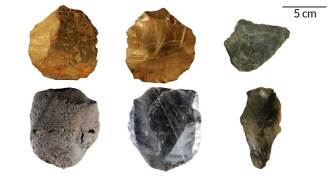
Ancient stone-tool making method arose multiple times
Hominids in both Africa and Eurasia independently invented a flake-tool technique hundreds of thousands of years ago, countering a long-held idea in archaeology.
- Earth
Shrinking ancient sea may have spawned Sahara Desert
The Saharan Desert probably formed 7 million years ago as the ancient Tethys Sea, the forerunner of the Mediterranean Sea, shrank.
- Anthropology
Earlier dates for Neandertal extinction cause a fuss
Revised dates suggest Neandertals coexisted with modern humans for several thousand years in Europe before disappearing 40,000 years ago.
- Humans
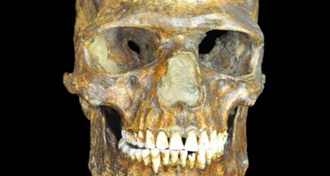
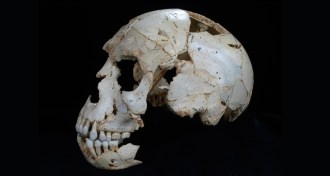
Skulls reveal Neandertal’s hodge-podge genealogy
A new analysis of ancient hominid skulls reveals a patchy anatomical start of the Neandertal lineage.
- Life
Starchy foods more filling than fiber, lab tests suggest
Tests of gut microbe digestion of potato starch and fiber suggest that moving away from grass-heavy ancestral diets may not be the reason for obesity epidemic.