Life
We summarize the week's scientific breakthroughs every Thursday.
- Animals
Insects’ extreme farming methods offer us lessons to learn and oddities to avoid
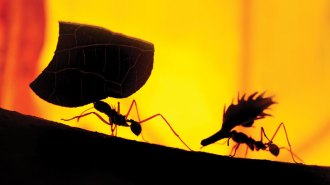
Insects invented agriculture long before humans did. Can we learn anything from them?
- Life
How much space does nature need? 30 percent of the planet may not be enough
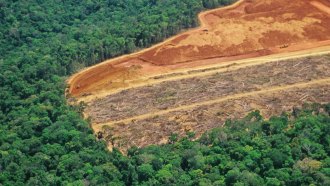
Nations are drafting a plan to protect 30 percent of Earth by 2030 to save biodiversity. The number reflects politics more than scientific consensus.
- Neuroscience
‘The Idea of the Brain’ explores the evolution of neuroscience
Despite advances, much about the human brain is still a mystery, a new book shows
- Life
Toxin-producing bacteria can make this newt deadly
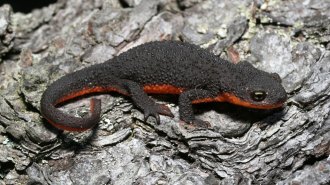
Bacteria living on the skin of some rough-skinned newts produce tetrodotoxin, a paralytic chemical also found in pufferfish.
- Chemistry
Ancient recipes led scientists to a long-lost natural blue
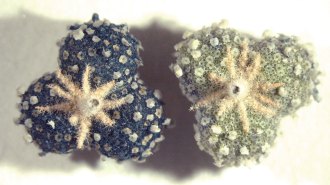
Led by medieval texts, scientists hunted down a plant and extracted from its tiny fruits a blue watercolor whose origins had long been a mystery.
- Animals
Dancing peacock spiders turned an arachnophobe into an arachnologist
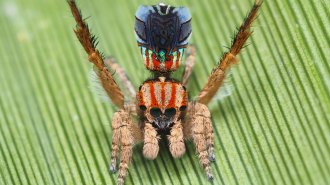
Just 22, Joseph Schubert has described 12 of 86 peacock spider species. One with a blue and yellow abdomen is named after Van Gogh’s Starry Night.
- Animals
Cold War nuclear test residue offers a clue to whale sharks’ ages
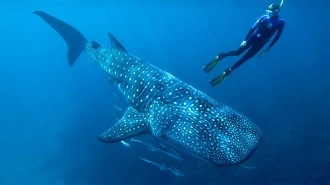
One unexpected legacy of the Cold War: Chemical traces of atomic bomb tests are helping scientists figure out whale shark ages.
- Animals
Seabirds may find food at sea by flying in a massive, kilometers-wide arc
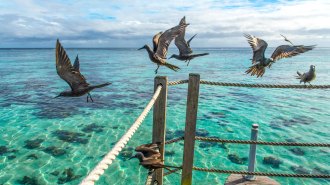
Radar shows that seabird groups can fly together in giant “rake” formations. If they are cooperating to find food, it’s on a scale not yet seen in the birds.
- Paleontology
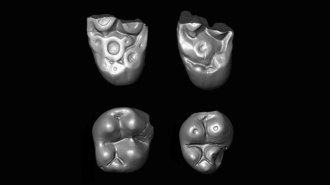
Two primate lineages crossed the Atlantic millions of years ago
Peruvian primate fossils point to a second ocean crossing by a now-extinct group roughly 35 million to 32 million years ago.
- Animals
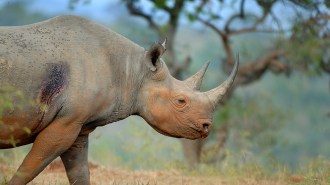
Hitchhiking oxpeckers warn endangered rhinos when people are nearby
Red-billed oxpeckers do more than just eat parasites from rhinos’ backs. The birds can alert the hunted mammals to potential danger, a study finds.
- Environment
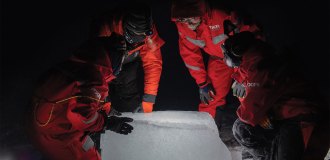
A year long expedition spotlights night life in the Arctic winter
Scientists anchored to an ice floe near the North Pole are investigating how life survives polar night and what changes will occur as the Arctic continues to warm.
- Life
The Great Barrier Reef is suffering its most widespread bleaching ever recorded
Major bleaching events are recurring with increasing frequency on the Great Barrier Reef, hindering its recovery.