Science & Society
We summarize the week's scientific breakthroughs every Thursday.
- Science & Society
What Science News saw during the solar eclipse
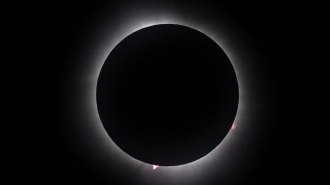
Science News staffers took to different parts of the United States to take in the eclipse’s glow. Here’s a glimpse of what we saw during the 2024 event.
- Space
During the awe of totality, scientists studied our planet’s reactions
Earth’s atmosphere was a big area of focus for scientists studying the total solar eclipse on April 8, 2024.
- Science & Society
Your last-minute guide to the 2024 total solar eclipse
From getting eclipse glasses to checking your weather, we’ve got you covered to help you enjoy this incredible solar eclipse.
- Chemistry
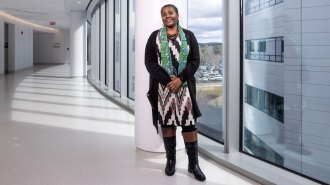
Protein whisperer Oluwatoyin Asojo fights neglected diseases
Oluwatoyin Asojo’s work on hookworm protein structures have contributed to a vaccine being tested in people.
- Astronomy
How a 19th century astronomer can help you watch the total solar eclipse
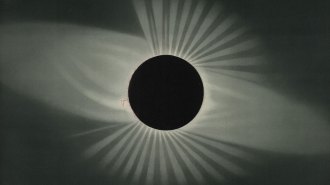
Astronomer Maria Mitchell’s observations of total solar eclipses from more than 100 years ago hold tips that are still relevant for watching an eclipse.
- Psychology
Timbre can affect what harmony is music to our ears
The acoustic qualities of instruments may have influenced variations in musical scales and preferred harmonies.
- Science & Society
Not all cultures value happiness over other aspects of well-being
Nordic countries topped the 2024 world happiness rankings. But culture dictates how people respond to surveys of happiness, a researcher argues.
- Space
‘Space: The Longest Goodbye’ explores astronauts’ mental health
The documentary follows NASA astronauts and the psychologists helping them prepare for future long-distance space trips to the moon and Mars.
- Physics
‘Countdown’ takes stock of the U.S. nuclear weapons stockpile
Physicists grapple with their role as stewards of the United States’ aging nuclear weapons in the new book by Sarah Scoles.
- Artificial Intelligence
Why large language models aren’t headed toward humanlike understanding
Unlike people, today's generative AI isn’t good at learning concepts that it can apply to new situations.
- Physics
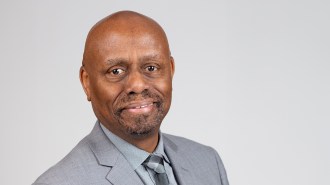
Physicist Sekazi Mtingwa considers himself an apostle of science
After big contributions in accelerator physics, Sekazi Mtingwa has been focused on opening science for everyone.
- Animals
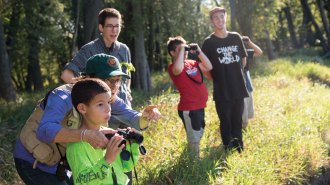
A new book explores the transformative power of bird-watching
In Birding to Change the World, environmental scientist Trish O’Kane shows how birds and humans can help one another heal.