Feature
- Climate
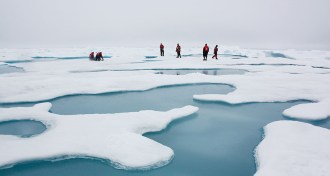
Changing climate: 10 years after ‘An Inconvenient Truth’
In the 10 years since "An Inconvenient Truth," climate researchers have made progress in predicting how rising temperatures will affect sea level, weather patterns and polar ice.
- Health & Medicine
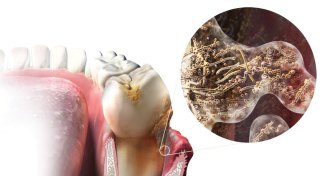
Gum disease opens up the body to a host of infections
Researchers are getting to the root of gum disease's implications for other diseases.
- Health & Medicine
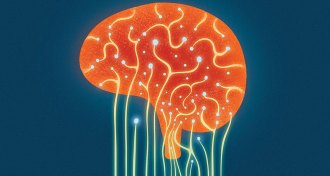
Microbes can play games with the mind
Our bodies are having a conversation with our microbiome that may be affecting our mental health — for better or worse.
- Health & Medicine
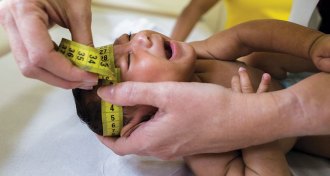
Special Report: Here’s what we know about Zika
Tracing Zika’s path and its potential links to microcephaly in babies and Guillain-Barré syndrome has scientists planning a new war on mosquitoes.
- Health & Medicine
How Zika became the prime suspect in microcephaly mystery
New evidence in human cells strengthens the case against Zika in Brazil's microcephaly surge, but more definitive proof could come this summer from Colombia.
- Health & Medicine
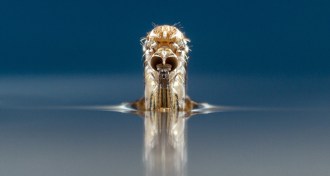
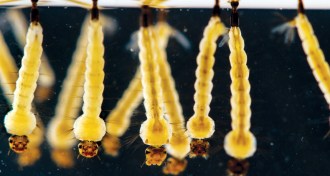
Efforts to control mosquitoes take on new urgency
The major mosquito that is spreading Zika virus has quirks that make it one of the toughest to fight.
- Health & Medicine
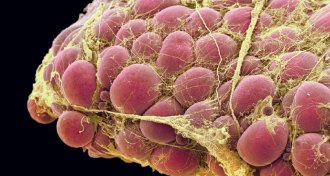
Cells from fat mend bone, cartilage, muscle and even the heart
Stem cells and other components of fat can be coerced to grow into bone, cartilage, muscle or to repair the heart.
- Quantum Physics
Ultrasmall engines bend second law of thermodynamics
Car engines and batteries run because of the second law of thermodynamics, which appears to work, with just a little bending, for ultrasmall engines in the quantum realm as well.
- Physics
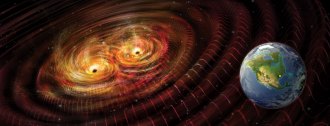
Gravitational waves explained
Colliding black holes send ripples through spacetime that can be detected here on Earth. What are these gravitational waves, and how did Advanced LIGO detect them?
- Planetary Science
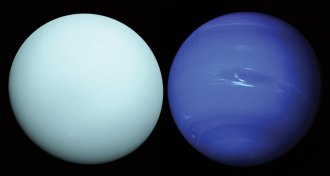
Support grows for a return to ice giants Uranus and Neptune
Thirty years ago, Voyager 2 cruised past Uranus and then on to Neptune. Now planetary scientists think it’s time to go back.
- Earth
Ocean’s plastics offer a floating fortress to a mess of microbes
Microbes take up residence on ocean plastics, potentially causing changes in ocean environments.
- Genetics
GMOs haven’t delivered on their promises — or risks
Genetically modified foods have been studied extensively and are abundant on supermarket shelves, but they haven’t managed to end world hunger yet.