News
- Quantum Physics
Quantum experiment dissects wave-particle mash-up
A modified version of a landmark quantum physics experiment has shown that a single parcel of light can be a particle and a wave simultaneously.
- Climate
Rate of atmospheric carbon dioxide rise unprecedented
The current rate of carbon dioxide entering the atmosphere is unprecedented over at least the last 66 million years, new research shows.
- Planetary Science
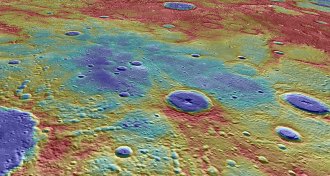
Origin date established for Mercury’s magnetic field
A 3.8-billion-year-old magnetic field on Mercury provides clues as to how the once volcanically active planet evolved.
- Health & Medicine
Kids who have had measles are at higher risk of fatal infections
Measles infection leaves kids vulnerable to other infectious diseases for much longer than scientists suspected.
- Psychology
On Facebook, you control the slant of the news you choose
Facebook users shield themselves from opposing political ideas more than the site does.
- Genetics
Editing human germline cells sparks ethics debate
Human gene editing experiments raise scientific and societal questions.
- Chemistry
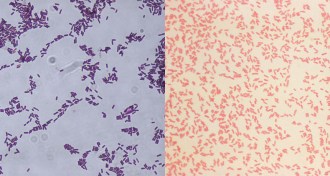
Bacteria staining method has long been misexplained
New research upends what scientists know about a classic lab technique, called gram staining, used for more than a century to characterized and classify bacteria.
- Microbes
Possible nearest living relatives to complex life found in seafloor mud
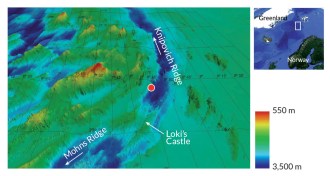
New phylum of sea-bottom archaea microbes could be closest living relatives yet found to the eukaryote domain of complex life that includes people.
- Neuroscience
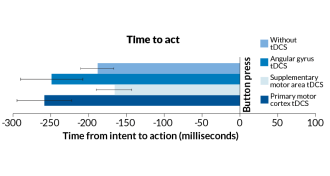
Stimulating nerve cells stretches time between thinking, doing
A head zap can stretch the time between intention and action.
- Chemistry
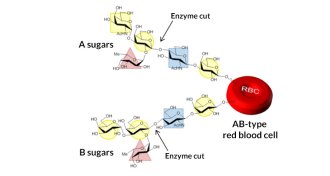
Sugar-cleaving molecule raises hope for universal blood
An engineered enzyme can quickly slice and dice some A and B markers from blood cells, bringing researchers closer to creating universal blood.
- Genetics
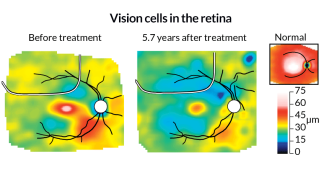
Gene therapy for blindness dims a bit
Gene therapy improves vision temporarily but can’t save sight.
- Neuroscience
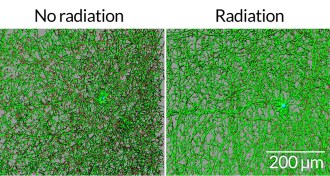
Zipping to Mars could badly zap brain nerve cells
Charged particles like the ones astronauts might encounter wallop the brain, mouse study suggests.