Science in the News
- Health & Medicine
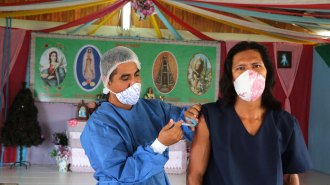
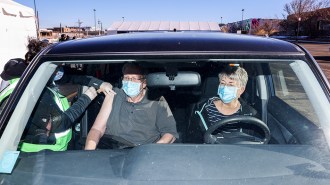
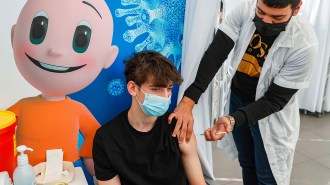
Here’s what makes 4 promising COVID-19 vaccines unique — and potentially useful
More vaccines still in the works are exploring a variety of approaches, including pills and electrical zaps.
- Health & Medicine
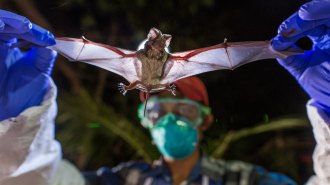
We still don’t know for sure where the coronavirus came from. Here’s why
A year into the pandemic, we know the virus probably came from bats, but how and why it leaped to humans are still unknown.
- Health & Medicine
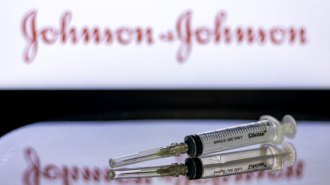
What you need to know about J&J’s newly authorized one-shot COVID-19 vaccine
Even as a third COVID-19 vaccine becomes available in the United States, questions remain over how well it works and if people will take it.
- Health & Medicine
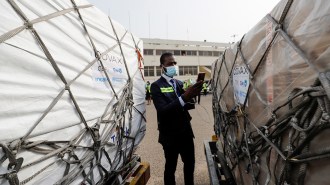
Global inequity in COVID-19 vaccination is more than a moral problem
Wealthy countries are vaccinating at much higher rates than low-income countries. Such inequities could ultimately prolong the pandemic for all.
- Health & Medicine
Can a COVID-19 vaccine’s second dose be delayed? It’s complicated
New data indicate that delaying second doses of COVID-19 vaccines may still provide protection, but some scientists aren’t convinced it’s OK.
- Health & Medicine
COVID-19 vaccines may be ready for teens this summer
Vaccinating children against COVID-19 is a crucial step towards reaching herd immunity and returning to pre-pandemic life.
- Psychology
In the social distancing era, boredom may pose a public health threat
Boredom contributes to pandemic fatigue and may account for why some people don’t follow social distancing rules.
- Health & Medicine
Making masks fit better can reduce coronavirus exposure by 96 percent
Double masking, rubber bands and other hacks can produce a tighter fit and prevent aerosol particles that can carry coronavirus from getting through.
- Health & Medicine
How coronavirus variants may drive reinfection and shape vaccination efforts
New coronavirus variants could infect people who have already recovered from COVID-19 or been vaccinated, but there are still many unknowns.
- Science & Society
Biden administration outlines its ambitious plan to tackle the COVID-19 pandemic
Epidemiologist Michael Osterholm, an adviser to the Biden transition team, talks about the plans to tackle the public health crisis COVID-19 created.
- Health & Medicine
Could delaying a second vaccine dose lead to more dangerous coronavirus strains?
Some experts worry extending the time between vaccine doses could help the virus evolve in potentially harmful ways, but viral evolution is complex.
- Health & Medicine
How does the newly authorized Moderna COVID-19 vaccine compare to Pfizer’s?
The FDA has granted emergency use authorization to Moderna’s COVID-19 vaccine, bringing the number of vaccines available in the United States to two.