1,576 results
1,576 results for: Bees
- Animals
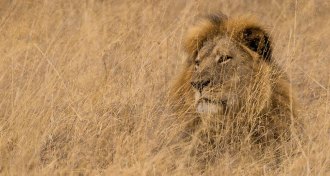
Don’t let Cecil the lion distract from the big conservation challenges
Cecil the lion’s death rocketed across the news and social media. But there are bigger conservation challenges that need attention, too.
- Animals
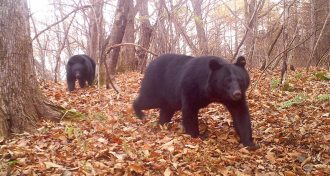
How bears engineer Japanese forests
In Japanese forests, black bears climb trees, breaking limbs. Those gaps in the forest provide light to fruiting plants, a new study finds.
- Plants
Flowers’ roles considered in ecosystems and economics
In ‘The Reason for Flowers’, a pollination ecologist chronicles the science and culture of blossoms from the dawn of humanity.
- Life
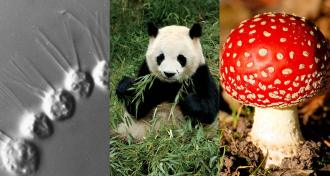
The tree of life gets a makeover
Biology’s tree of life has morphed from the familiar classroom version emphasizing kingdoms into a complex depiction of supergroups, in which animals are aligned with a slew of single-celled cousins.
- Environment
Mystery toxins in tainted New Zealand honey nabbed
Sweet and stealthy toxins have been caught sticky-handed, potentially solving a decades-long mystery of tainted honey in New Zealand.
- Plants
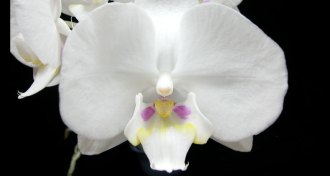
A protein battle underlies the beauty of orchids
The petal-and-lip shape that draws pollinators to orchids results from a competition between two protein complexes, a new study finds.
- Animals
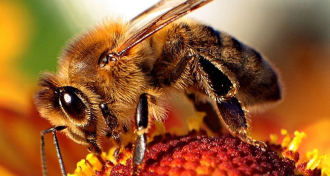
Bees may like neonicotinoids, but some may be harmed
Two high-profile tests raise worries that bees can’t avoid neonicotinoid pesticides and that wild species are at special risk.
- Animals
Shimmer and shine may help prey sabotage predators’ aim
Iridescent prey was more difficult to strike in a video game for birds.
- Environment
Manganese turns honeybees into bumbling foragers
Ingesting low doses of the heavy metal manganese disrupts honeybee foraging, a new experiment suggests.
- Animals
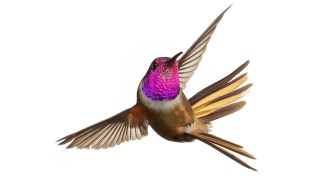
Hummingbird may get promoted
Not just a subspecies: A flashy, squeaky hummingbird should become its own species, ornithologists argue.
- Neuroscience
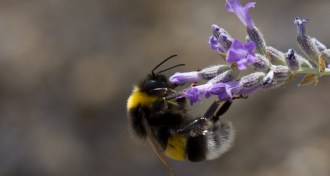
Bees may merge their flower memories
Bumblebees sometimes prefer fake flowers with the combined patterns and colors of ones seen before, suggesting they merge memories of past experiences.
- Life
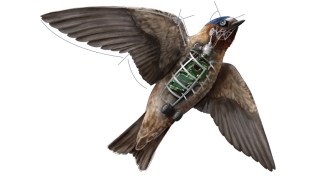
Flying animals can teach drones a thing or two
Scientists have turned to Mother Nature’s most adept aerial acrobats — birds, bees, bats and other animals — to inspire their designs for self-directed drones.