1,181 results
1,181 results for: Spiders
-
Looking back on science can refocus our attention
Special projects editor Elizabeth Quill shares her thoughts on how the history of science can help us sharpen our focus on its future.
- Paleontology
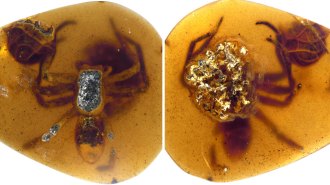
This is the oldest fossil evidence of spider moms taking care of their young
A spider trapped in amber 99 million years ago guarded her eggs and may have helped raise her young.
- Animals
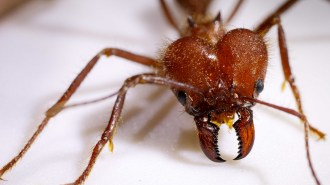
How metal-infused jaws give some ants an exceptionally sharp bite
Some small animals make cuts, tears and punctures that they couldn’t otherwise do using body parts reinforced with metals such as zinc and manganese.
- Animals
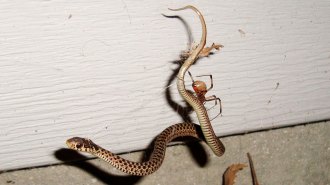
Snake-eating spiders are surprisingly common
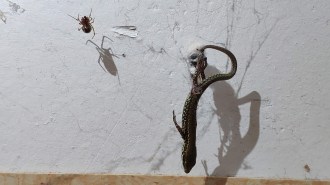
Spiders from at least 11 families feed on serpents many times their size, employing a host of tactics to turn even venomous snakes into soup.
- Life
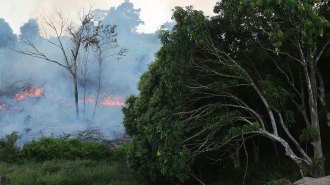
Fires may have affected up to 85 percent of threatened Amazon species
Since 2001, fires in the Amazon have impacted up to about 190,000 square kilometers — roughly the size of Washington state.
- Earth
A new book reveals stories of ancient life written in North America’s rocks
In ‘How the Mountains Grew,’ John Dvorak probes the interlinked geology and biology buried within the rocks of North America.
- Animals
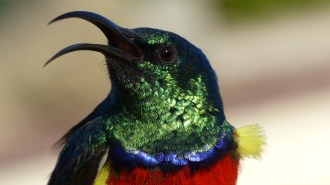
Sunbirds’ dazzling feathers are hot, in both senses of the word
Iridescent feathers reflect vivid colors. But they also become scorching hot in the sunlight, a study finds.
- Life
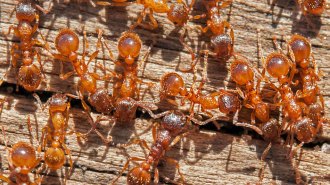
European fire ant chemicals may send spiders scurrying away
Black widows and some other common spider species avoid spaces where fire ants once roamed, suggesting the insects could inspire a spider repellent.
-
- Animals
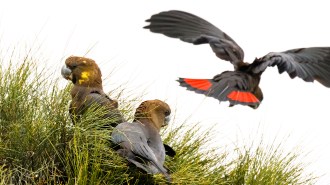
A year after Australia’s wildfires, extinction threatens hundreds of species
As experts piece together a fuller picture of the scale of damage to wildlife, more than 500 species may need to be listed as endangered.
- Animals
How a tiny spider uses silk to lift prey 50 times its own weight
Dropping the right silk can haul mice, lizards and other giants up off the ground.
- Animals
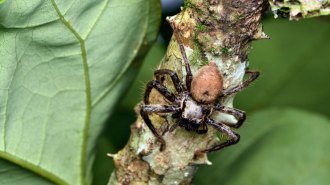
These spiders may sew leaves into fake shelters to lure frogs to their doom
Madagascar’s huntsman spiders use silk to turn two leaves into a cool hollow. Such microhabitats may appeal to the spiders’ prey, a study suggests.