411 results
411 results for: Wolves
- Animals
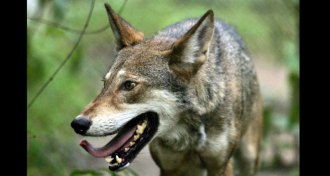
How human activities may be creating coywolves
Endangered red wolves will mate with coyotes when their partners are killed, which often happens because of human activities, a new study finds.
- Animals
‘Domesticated’ explores how humans have altered animals
Science journalist Richard Francis delves into the genetic changes humans have caused in dogs, cats, pigs, horses, camels and more.
- Anthropology
‘The Invaders’ sees dogs as key to modern humans’ success
Neandertals went extinct when Homo sapiens transformed wolves into hunting aids, author proposes.
- Science & Society
NCAA tournament puts prediction strategies to the test
When it comes to strategies for building the most winning bracket during March Madness, all bets are off.
- Paleontology
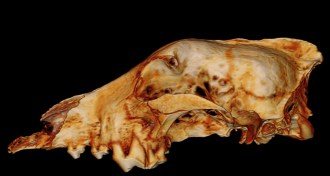
Ancient wolf skulls challenge dog domestication timeline
A 3-D analysis of two ancient canine skulls from Russia and Belgium suggests the fossils were of wolves, not dogs.
- Animals
China’s reindeer are on the decline
A small, semi-domesticated population of reindeer found in northern China is suffering due to threats ranging from inbreeding to tourism.
- Paleontology
Did Mammals Spread from Asia? Carbon blip gives clue to animals’ Eden
A new dating of Chinese fossils buttresses the idea than an Asian Eden gave rise to at least one of the groups of mammal species that appeared in North America some 55 million years ago.
- Paleontology
Bone Crushers: Teeth reveal changing times in the Pleistocene
Tooth-fracture incidence among dire wolves in the fossil record can indicate how much bone the carnivores crunched and, therefore, something about the ecology of their time.
- Animals
How dingoes got down under
DNA analysis suggests that Australia got its famous dingoes from a very few dogs brought along with people fanning out from East Asia some 5,000 years ago.
-
Kibble for Thought: Dog diversity prompts new evolution theory
A genetic mutation that researchers have examined in several dog breeds may drive evolution in many other species.
- Animals
Feral breed lacks domestic dogs’ skill
Wild dogs that haven't lived with people for 5,000 years share little of the capacity of their domesticated cousins for interpreting human gestures.
- Animals
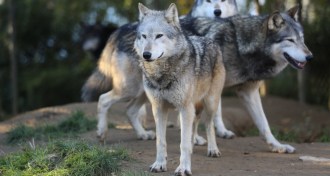
Wolf vs. Raven? Thieving birds may drive canines to form big packs
A previously underappreciated reason why wolf packs get so big could be the relentless food snitching of ravens.