Humans
We summarize the week's scientific breakthroughs every Thursday.
- Genetics
Easter Islanders sailed to Americas, DNA suggests
Genetic ties among present-day populations point to sea crossings centuries before European contact with Easter Island.
- Humans
Oldest human DNA narrows time of Neandertal hookups
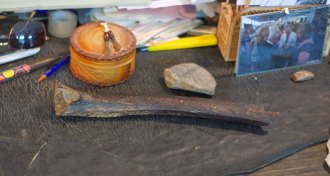
A 45,000-year-old Siberian bone provides genetic clues about the timing of interbreeding between ancient humans and Neandertals.
- Health & Medicine
There’s no need to panic about enterovirus
The enterovirus behind this year’s outbreak, EV-D68, has been around for decades and generally causes mild symptoms.
- Humans
Anglo-Saxons left language, but maybe not genes to modern Britons
Modern Britons may be more closely related to Britain’s indigenous people than they are to the Anglo-Saxons, a new genetic analysis finds.
- Psychology
Majority doesn’t always rule in teen booze use
Having one abstainer as a friend cuts teens’ odds of getting drunk and binge drinking, a study finds.
- Health & Medicine
Tiny human intestine grown inside mouse
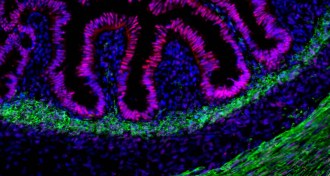
Human gut tissue transplanted into a mouse can grow into a working intestine that doctors could use to test disease treatments.
- Health & Medicine
Feedback
Readers discuss methods to prevent sepsis and whether genes are thrifty, while Tina Saey clears up some confusion regarding Ebola's airborne status.
- Microbes
Microbes can redeem themselves to fight disease
With some genetic engineering, bacteria can morph from bad to good and help attack invading cancer cells.
- Health & Medicine
Poop-transplant pills treat intestinal infection
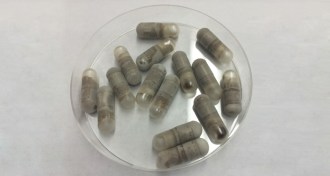
Frozen capsules stuffed with healthy gut bacteria from donated poop fight C. difficile infections.
- Health & Medicine
Jet lag affects gut microbes
Jet-lagged bacteria in the gut impair mice’s metabolism, causing obesity and diabetes-related problems.
- Health & Medicine
Ebola continues rapid spread in West Africa
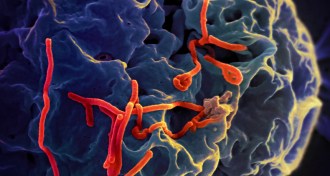
Ebola continues to spread in West Africa, but some countries are poised to declare victory over the deadly virus.
- Anthropology
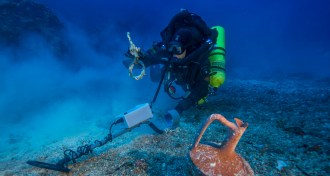
Ancient Greek shipwreck found to be world’s largest
Special diving suits enable discovery that much of a nearly 2,100-year-old Greek vessel and its cargo survive.