Neuroscience
- Health & Medicine
Zika cases are down, but researchers prepare for the virus’s return
The number of Zika cases in the Western Hemisphere have dropped this year, but the need for basic scientific and public health research of the virus remains strong.
- Life
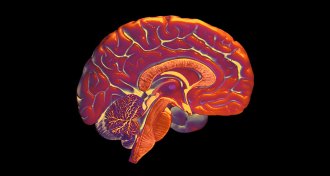
Mini brains may wrinkle and fold just like ours
Brain organoids show how ridges and wrinkles may form.
- Neuroscience
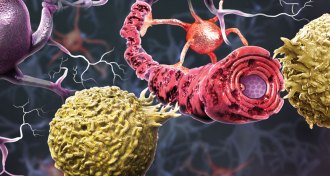
Scientists are seeking new strategies to fight multiple sclerosis
Facing so many unknowns about multiple sclerosis, researchers explore the immune system, the neurons and the gut to fight the disease.
- Tech
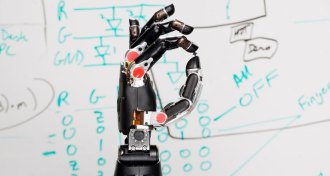
50 years ago, artificial limbs weren’t nearly as responsive
Artificial limbs have come a long way since 1967.
- Neuroscience
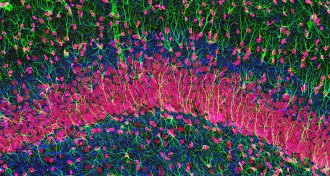
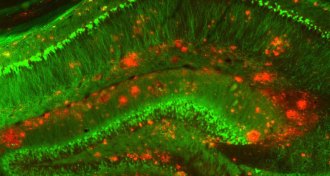
Study casts doubt on whether adult brain’s memory-forming region makes new cells
An examination of 54 human brains suggests that adults don’t grow new neurons in the hippocampus, contrary to several widely accepted studies.
- Neuroscience
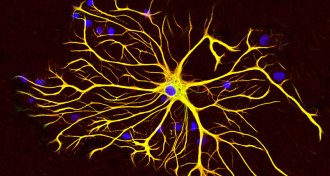
The brain’s helper cells have a hand in learning fear
After a traumatic experience, rat brains release inflammatory signals that come from astrocytes, suggesting a new role for the brain’s “helper” cells.
- Neuroscience
See these first-of-a-kind views of living human nerve cells
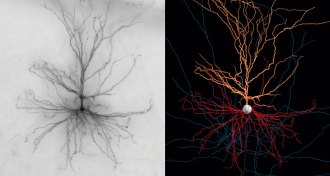
A catalog of live brain cells reveals stunning diversity and intricate shapes, and may help scientists understand the abilities of the human brain.
- Neuroscience
Alzheimer’s protein can travel from blood to build up in the brain
Experiments in mice show Alzheimer’s protein can travel from the blood of an affected mouse to the brain of a healthy animal.
- Particle Physics
Readers question photons colliding, black sea snakes and more
Readers had questions about brain flexibility, black sea snakes and photon collisions.
- Animals
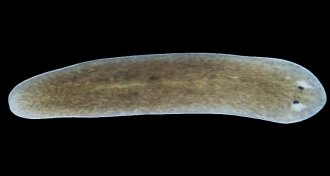
To understand the origins of pain, ask a flatworm
A danger-sensing protein responds to hydrogen peroxide in planarians, results that hint at the evolutionary origins of people’s pain sensing.
- Neuroscience
There’s no rest for the brain’s mapmakers
Navigational grid cells stay on the job during sleep.
- Neuroscience
New book offers a peek into the mind of Oliver Sacks
The wide-ranging essays in Oliver Sacks’ ‘The River of Consciousness’ contemplate evolution, memory and more.