All Stories
- Neuroscience
Sense of smell is strictly personal, study suggests
A new test can identify individuals based on their sense of smell, and may hold information about a person’s genetic makeup as well.
- Neuroscience
Brain’s adult stem cells born early
By tracing the lineages of adult stem cells in the mouse brain, scientists get a view of the cells’ early lives.
- Animals
Silver ant hairs reflect sunlight, keeping Sahara dweller cool
The shiny hairs of the Saharan silver ant simultaneously reflect sunlight and permit the release of body heat, keeping the insects just cool enough to scavenge in the extreme summer sun.
- Astronomy
Big exoplanet may be surrounded by helium
Warm Neptune-sized exoplanet might have atmospheres filled with helium.
- Earth
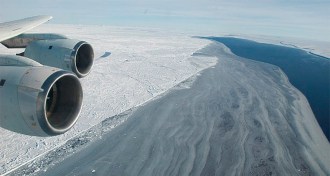
Fast-spreading crack threatens giant Antarctic ice shelf
A fast-spreading crack threatens Larsen C, one of Antarctica’s biggest ice shelves, satellite data suggest.
- Planetary Science
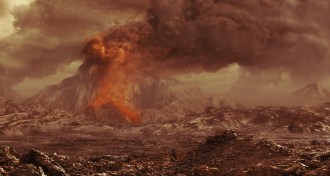
Evidence mounts for active volcanoes on Venus
The Venus Express orbiter detected possible signs of active volcanism on the planet next door.
- Planetary Science
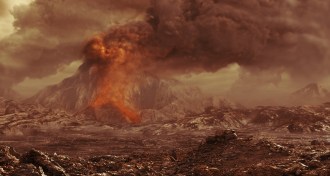
Evidence mounts for active volcanoes on Venus
The Venus Express orbiter detected possible signs of active volcanism on the planet next door.
- Planetary Science
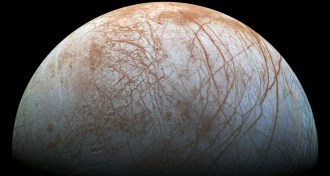
NASA moves ahead with a mission to Europa
A NASA mission slated for the 2020s to Jupiter’s icy moon will try to figure out if the ocean there is habitable.
- Animals
When baboons travel, majority rules
GPS study suggests baboons use simple rules to resolve travel disputes without leaders.
- Genetics
Ivory DNA pinpoints poaching hot spots
Genetic analysis of ivory DNA reveals major poaching hot spots in Africa.
- Agriculture
Many of Earth’s groundwater basins run deficits
Twenty-one of Earth’s 37 largest groundwater basins are rapidly depleting, satellite data show.
- Anthropology
Kennewick Man’s DNA links him to present-day Native Americans
Genetic analysis of Kennewick Man suggests that the ancient Pacific Northwest man was most closely related to modern Native Americans, not Polynesians.