DNA data offer evidence of unknown extinct human relative
Melanesians carry genetic clues to hominid not revealed by fossils
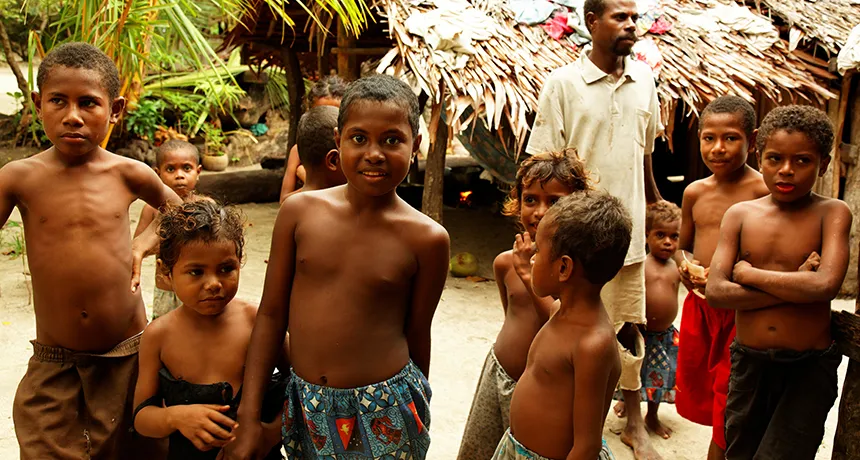
GENETIC HEIRLOOMS People from Papua New Guinea (shown) and Australia carry small amounts of DNA from extinct human relatives. New research suggests that the DNA may not come from Neandertals or Denisovans, but from a third, previously unknown extinct hominid.
Guido Amrein Switzerland/Shutterstock
VANCOUVER — Traces of long-lost human cousins may be hiding in modern people’s DNA, a new computer analysis suggests.
People from Melanesia, a region in the South Pacific encompassing Papua New Guinea and surrounding islands, may carry genetic evidence of a previously unknown extinct hominid species, Ryan Bohlender reported October 20 at the annual meeting of the American Society of Human Genetics. That species is probably not Neandertal or Denisovan, but a different, related hominid group, said Bohlender, a statistical geneticist at the University of Texas MD Anderson Cancer Center in Houston. “We’re missing a population or we’re misunderstanding something about the relationships,” he said.
This mysterious relative was probably from a third branch of the hominid family tree that produced Neandertals and Denisovans,


