A distant cousin of jellyfish may survive without working mitochondria
The parasite is the first known multicellular eukaryote lacking this hallmark of complex life
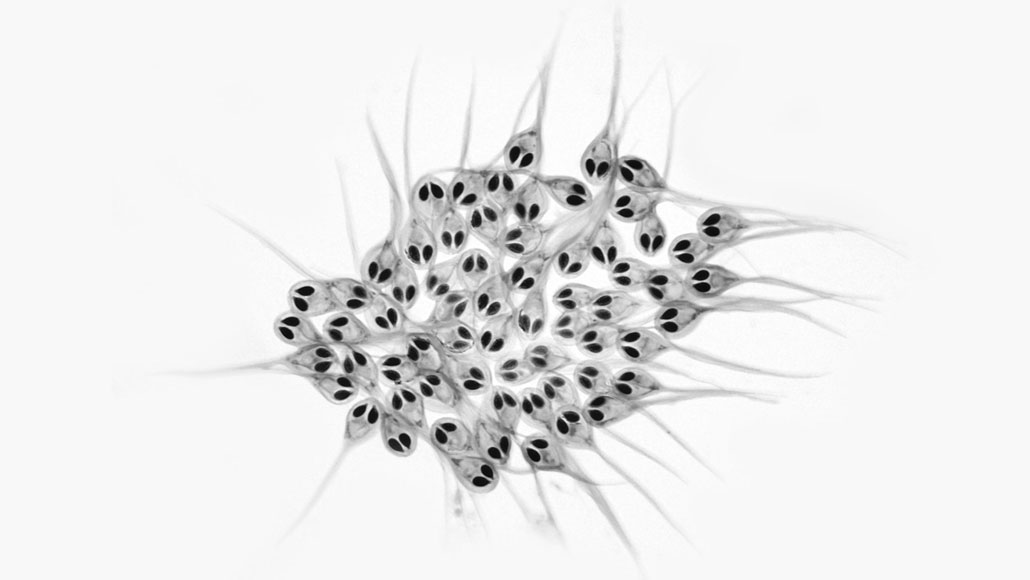
The parasitic cnidarian Henneguya salminicola, which has lost its mitochondrial genome, infects salmon as part of its life cycle. When the salmon dies, the parasite releases microscopic spores (shown), which are then eaten by worms, the creature’s other host.
Stephen Atkinson