In a feat that could lead to new medical treatments, researchers have grown healthy liver cells on silicon chips.
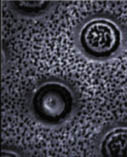
Called a “liver bioreactor,” the apparatus consists of a chip of spongelike silicon with pores just 2 to 1,500 nanometers wide. The research team, from the University of California, San Diego (UCSD), used electrochemistry to etch the pores and then circuit-making techniques to add 15-micron-wide wells, each just big enough to house a rat liver cell.