Anthropology
- Humans
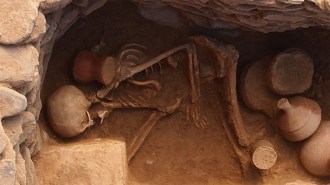
DNA indicates how ancient migrations shaped South Asian languages and farming
Farming in the region may have sprung up locally, while herders from afar sparked language changes.
- Anthropology
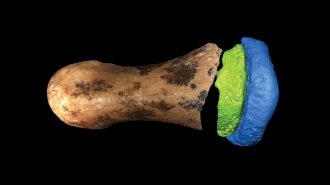
This ancient Denisovan finger bone is surprisingly humanlike
Despite Neandertal ties, extinct hominids called Denisovans had a touching link to humans, a new study finds.
- Humans
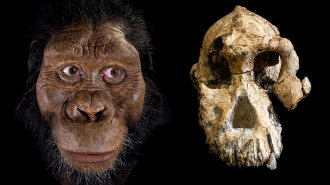
A 3.8-million-year-old skull reveals the face of Lucy’s possible ancestors
A fossilized hominid skull found in an Ethiopian desert illuminates the earliest-known Australopithecus species.
- Anthropology
A tiny skull fossil suggests primate brain areas evolved separately
Digital reconstruction of a fossilized primate skull reveals that odor and vision areas developed independently starting 20 million years ago or more.
- Humans
India’s Skeleton Lake contains the bones of mysterious European migrants
Not all of the hundreds of skeletons found at a north Indian lake are from the same place or period. What killed any of these people is still unknown.
- Anthropology
Ancient Maya warfare flared up surprisingly early
Extreme conflicts broke out well before the decline of the Maya civilization, researchers say.
- Archaeology
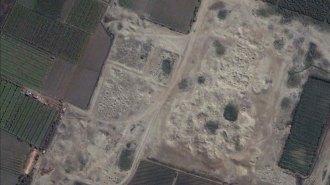
Satellites are transforming how archaeologists study the past
In ‘Archaeology from Space,’ Sarah Parcak takes readers on a lively tour of the past, and archaeology of the 21st century.
- Health & Medicine
Readers inquire about measles, vaccine hesitancy and more
Readers had questions about vaccine-hesitant parents, measles and DNA sequencing.
- Anthropology
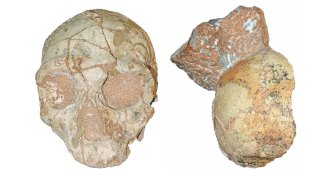
A Greek skull may belong to the oldest human found outside of Africa
Humans possibly reached southeastern Europe by 210,000 years ago.
- Anthropology
Ancient humans used the moon as a calendar in the sky
Whether the moon was a timekeeper for early humans, as first argued during the Apollo missions, is still up for debate.
- Anthropology
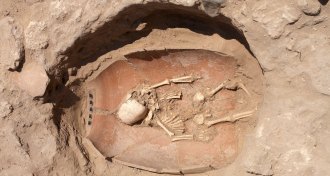
Ancient DNA reveals the origins of the Philistines
A mysterious Biblical-era population may have fled Bronze Age calamities.
- Anthropology
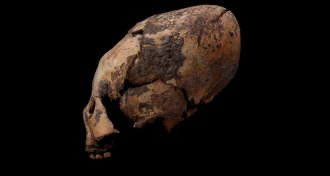
East Asians may have been reshaping their skulls 12,000 years ago
An ancient skull-molding practice had a long history in northeastern Asia, researchers say.