Chemistry
We summarize the week's scientific breakthroughs every Thursday.
- Anthropology
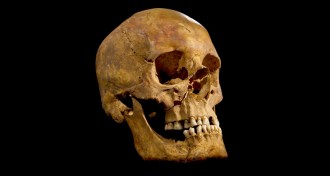
Richard III ate like a king before biting the dust
King Richard III’s brief reign included a sudden shift to eating fancy food and drink.
- Chemistry
Molecular cage traps rare gases
Organic compound could cull valuable xenon from the air and detect cancer-causing radon in homes.
- Chemistry
Boron atoms take on buckyball shape
The first boron buckyball-like molecule could be used for storing hydrogen, scientists suggest.
- Animals
Mysterious neurotoxin may help flatworms kill prey
Tetrodotoxin, the deadly chemical in pufferfish, could help flatworms transform their earthworm prey into puddles of goo.
- Chemistry
Safe salt could yield cheaper, more efficient solar cells
Magnesium chloride could be the key ingredient for concocting efficient solar cells with cadmium telluride.
- Science & Society
‘Prisoners, Lovers, and Spies’ reveals the secrets of invisible ink
Kristie Macrakis takes readers on a tour of invisible ink’s history and the need to hide information, from the earliest empires to the Internet age.
- Planetary Science
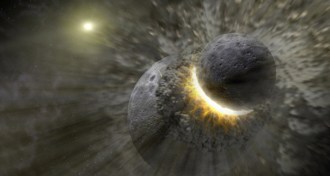
Moon’s origins revealed in rocks’ chemistry
A new chemical measurement of rocks from Earth and from the moon supports the giant impact hypothesis, which explains how the moon formed billions of years ago.
- Genetics
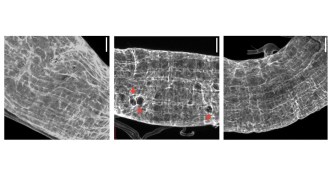
Bromine found to be essential to animal life
Fruit flies deprived of the element bromine can’t make normal connective tissue that supports cells and either don’t hatch or die as larvae.
- Chemistry
Decay of Leonardo da Vinci drawing reflected in light
Light that bounces off a Leonardo da Vinci drawing, widely considered a self-portrait, has revealed extensive chemical damage that causes yellowing.
- Chemistry
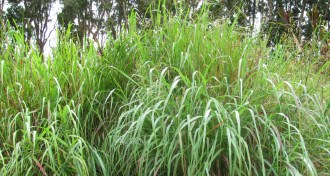
Bacteria take plants to biofuel in one step
Engineered bacterium singlehandedly dismantles tough switchgrass molecules, making sugars that it ferments to make ethanol.
- Materials Science
Jets of salty water make cellulose strands stronger
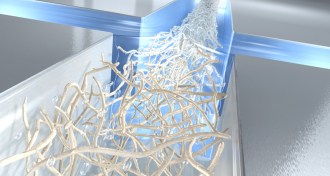
When blasted by jets of water, nanoscale fibers of cellulose align to form ultra-tough strands that rival the strength of steel, a new study shows.
- Paleontology
Dinosaurs could take tough breaks
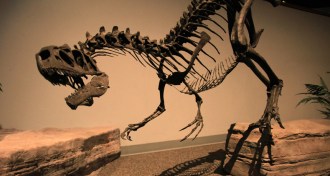
Meat-eating dinosaurs may have survived some extremely bad bone breaks, according to detailed chemical maps of the fossils.