Genetics
- Science & Society
We’ve got the genes for science journalism
Editor in Chief Nancy Shute discusses how genetic testing might not be reliable enough for people to plan for the future.
- Life
There’s a genetic explanation for why warmer nests turn turtles female
Scientists have found a temperature-responsive gene that controls young turtles’ sex fate.
- Animals
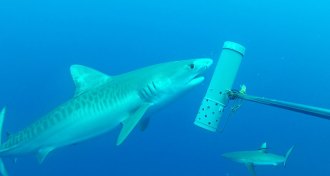
Here’s how to use DNA to find elusive sharks
Hard-to-find sharks that divers and cameras miss appear in genetic traces in the ocean.
- Genetics
Adapting to life in the north may have been a real headache
A cold-sensing protein has adapted to different local climates, also affecting risk of migraine.
- Particle Physics
Readers puzzled by particle physics and a papal decree
Readers had questions about neutrinoless double beta decay and the history of domesticated rabbits.
- Plants
New genetic details may help roses come up smelling like, well, roses
A detailed genetic look at China roses and an old European species shows that there’s a built-in trade-off between color and scent.
- Genetics
New genetic sleuthing tools helped track down the Golden State Killer suspect
DNA sleuths may have adapted new techniques for identifying John and Jane Does to track down a serial killer suspect.
- Plants
Genetically modified plant may boost supply of a powerful malaria drug
Using a DNA study and genetic engineering, researchers tripled the amount of an antimalarial compound naturally produced by sweet wormwood plants.
- Genetics
Cicadas on different schedules can hybridize
A new genetic study suggests that cicadas that emerge every 17 years have swapped genetic material with those that emerge every 13 years.
- Life
Larger spleens may help ‘sea nomads’ stay underwater longer
The Bajau people of Southeast Asia have a gene variant associated with larger spleens, boosting their oxygen while breath-hold diving, researchers say.
- Genetics
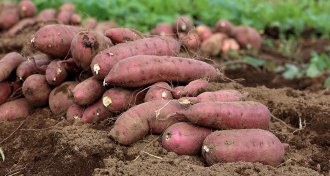
Sweet potatoes might have arrived in Polynesia long before humans
Genetic analysis suggests that sweet potatoes were present in Polynesia over 100,000 years ago, and didn’t need help crossing the Pacific.
- Genetics
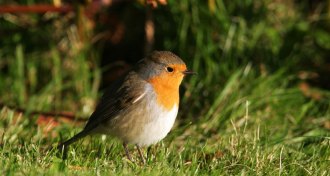
Birds get their internal compass from this newly ID’d eye protein
Birds can sense magnetic fields, thanks to internal compasses that likely rely on changes to proteins in the retina.