Genetics
- Genetics
What genetic tests from 23andMe, Veritas and Genos really told me about my health
A Science News reporter tried out three consumer genetic testing companies to see what people really learn about their health.
- Anthropology
Ancient Chinese farmers sowed literal seeds of change in Southeast Asia
Two waves of ancient migration from China to Southeast Asia spread farming and languages.
- Science & Society
We’ve got the genes for science journalism
Editor in Chief Nancy Shute discusses how genetic testing might not be reliable enough for people to plan for the future.
- Life
There’s a genetic explanation for why warmer nests turn turtles female
Scientists have found a temperature-responsive gene that controls young turtles’ sex fate.
- Animals
Here’s how to use DNA to find elusive sharks
Hard-to-find sharks that divers and cameras miss appear in genetic traces in the ocean.
- Genetics
Adapting to life in the north may have been a real headache
A cold-sensing protein has adapted to different local climates, also affecting risk of migraine.
- Particle Physics
Readers puzzled by particle physics and a papal decree
Readers had questions about neutrinoless double beta decay and the history of domesticated rabbits.
- Plants
New genetic details may help roses come up smelling like, well, roses
A detailed genetic look at China roses and an old European species shows that there’s a built-in trade-off between color and scent.
- Genetics
New genetic sleuthing tools helped track down the Golden State Killer suspect
DNA sleuths may have adapted new techniques for identifying John and Jane Does to track down a serial killer suspect.
- Plants
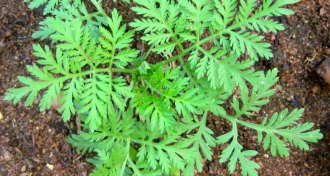
Genetically modified plant may boost supply of a powerful malaria drug
Using a DNA study and genetic engineering, researchers tripled the amount of an antimalarial compound naturally produced by sweet wormwood plants.
- Genetics
Cicadas on different schedules can hybridize
A new genetic study suggests that cicadas that emerge every 17 years have swapped genetic material with those that emerge every 13 years.
- Life
Larger spleens may help ‘sea nomads’ stay underwater longer
The Bajau people of Southeast Asia have a gene variant associated with larger spleens, boosting their oxygen while breath-hold diving, researchers say.