All Stories
-
-
- Paleontology
The Last Lost World
Ice Ages, Human Origins, and the Invention of the Pleistocene, by Lydia V. Pyne and Stephen J. Pyne.
-
2012 International Astronomical Union General Assembly
Science News’ coverage of the IAU meeting held August 20-21 in Beijing.
- Neuroscience
Nonstick trick in the brain
Getting drugs into the brain has proved to be a nanoscale puzzle: Anything bigger than 64 nanometers — about the size of a small virus — gets stuck in the space between brain cells once it gets through the blood-brain barrier. Justin Hanes of Johns Hopkins University School of Medicine and colleagues got around this rule by coating particles destined for brain cells in a dense layer of a polymer called polyethylene glycol.
- Health & Medicine
Tricks Foods Play
Most people would never equate downing a well-dressed salad or a fried chicken thigh with toking a joint of marijuana. But to Joseph Hibbeln of the National Institutes of Health, the comparison isn’t a big stretch.
- Animals
Face Smarts
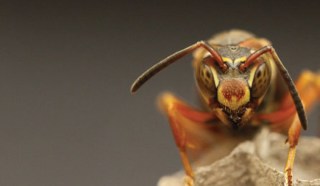
Macaques, sheep and even wasps may join people as masters at facial recognition.
- Humans
Africans’ genes mute on human birthplace
Latest DNA studies confirm previous research on the prehistory of African groups, but still can’t locate the root of the species.
- Humans
A moving lift for poor families
Federal housing subsidies didn’t fight poverty as hoped, but trading public housing for new neighborhoods brought psychological benefits.
- Math
Bumblebees navigate new turf without a map
The insects can quickly calculate the best route between flowers.
- Life
E. coli caught in the act of evolving
Researchers track thousands of bacterial generations to document the development of a trait nearly 25 years in the making.
- Health & Medicine
Oral MS drug passes tests
A drug called BG-12, similar to a psoriasis medicine used in Germany, supresses multiple sclerosis relapses well, two studies find.