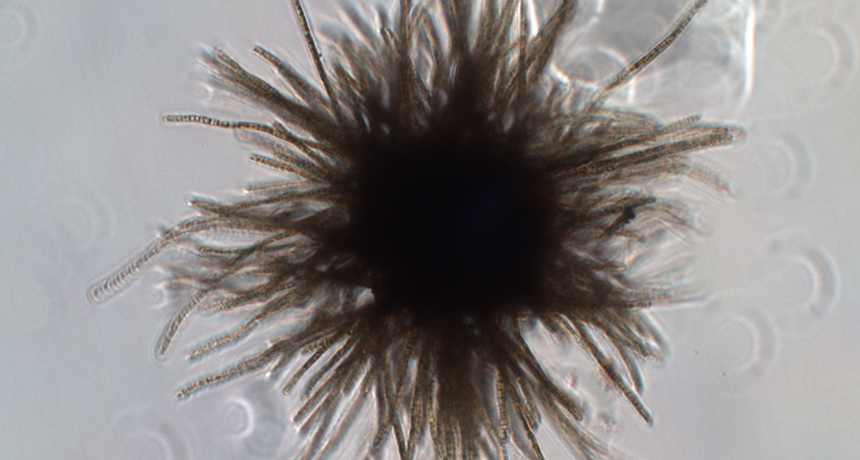
MUG SHOT Along with accomplices, cyanobacteria in the genus Trichodesmium, aka sea sawdust (shown), convert phosphorus into an unconventional chemical state, potentially upending scientists’ understanding of nutrient exchanges.
FWC Fish and Wildlife Research Institute/Flickr (CC BY-NC-ND 2.0)