Genetics
- Anthropology
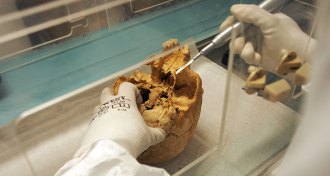
Ancient European farmers and foragers hooked up big time
Interbreeding escalated in regionally distinct ways across Neolithic Europe.
- Genetics
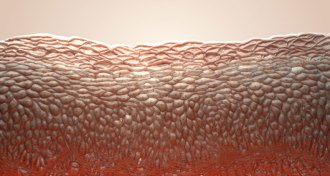
Scientists replaced 80 percent of a ‘butterfly’ boy’s skin
By correcting genes in stem cells and growing new skin in the lab, a new therapy repaired a genetic skin disease.
- Animals
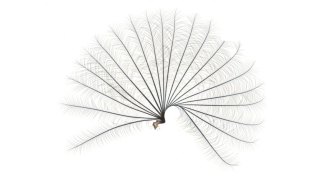
Here’s why some water striders have fans on their legs
A fan of tiny, elegant plumes on their legs helps certain water striders dash across flowing water without getting wet.
- Animals
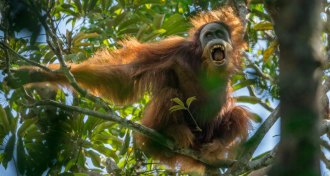
No more than 800 orangutans from this newly identified species remain
Endangered population of orangutans is the oldest surviving red ape lineage, a new study finds.
- Genetics
New CRISPR gene editors can fix RNA and DNA one typo at a time
New gene editors can correct common typos that lead to disease.
- Genetics
Inbreeding hurts the next generation’s reproductive success
Inbreeding has evolutionary consequences for humans.
- Genetics
Mating with Neandertals reintroduced ‘lost’ DNA into modern humans
Neandertal DNA brought back some old genetic heirlooms to modern humans.
- Genetics
Resurrecting extinct species raises ethical questions
'Rise of the Necrofauna' examines the technical and ethical challenges of bringing woolly mammoths and other long-gone creatures back from the dead.
- Genetics
Doubling up on ‘junk DNA’ helps make us human
DNA duplicated only in humans may contribute to human traits and disease.
- Animals
To understand the origins of pain, ask a flatworm
A danger-sensing protein responds to hydrogen peroxide in planarians, results that hint at the evolutionary origins of people’s pain sensing.
- Genetics
We’re more Neandertal than we thought
Neandertals contributed more to human traits than previously thought.
- Genetics
Ancient humans avoided inbreeding by networking
Ancient DNA expands foragers’ social, mating networks.