All Stories
- Science & Society
Sometimes failure is the springboard to success
Editor in chief Eva Emerson discusses scientific discoveries that resulted from failures large and small.
- Physics
A metallic odyssey, what’s causing sunspots and more reader feedback
Metallic hydrogen, sunspot formation, salty desalination leftovers and more in reader feedback.
- Humans
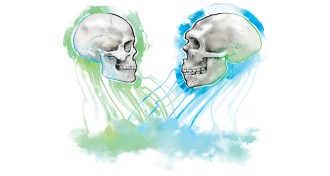
Animal hybrids may hold clues to Neandertal-human interbreeding
The physical effects of interbreeding among animals may offer clues to Neandertals’ genetic mark on humans.
- Tech
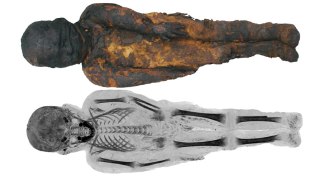
CT scans show first X-rayed mummy in new light
An ancient Egyptian child became the first mummy to be X-rayed in 1896. Today, CT scans reveal new insights into the child’s life — and death.
- Chemistry
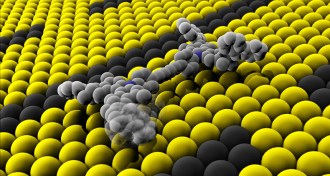
Minuscule machines earn trio 2016 chemistry Nobel
The creators of mini machines including chains, axles and motors have earned the 2016 Nobel Prize in chemistry.
- Tech
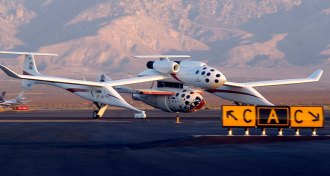
XPRIZE launched new kind of space race, book recounts
'How to Make a Spaceship' chronicles the XPRIZE challenge that helped ignite the private space industry.
- Physics
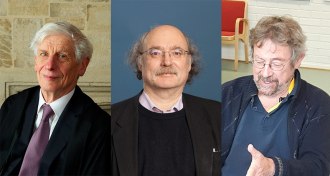
Nobel awarded for using math of shapes to explain exotic matter
The three scientists who won the 2016 Nobel Prize in physics predicted new materials using mathematics illustrated by bagels and pretzels.
- Planetary Science
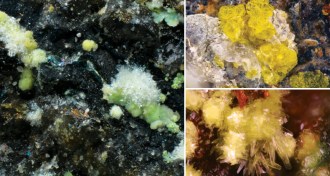
Rock hounds are on the hunt for new carbon minerals
The race is on to find about 140 predicted carbon-based minerals in locations around the world. Map included.
- Particle Physics
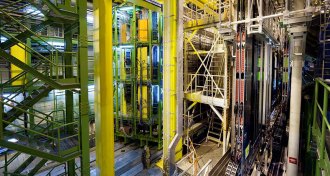
Evidence for new form of matter-antimatter asymmetry observed
Particles known as baryons show their first hints of antimatter-matter discrepancies.
- Physics
Trio wins physics Nobel for math underlying exotic states of matter
The 2016 Nobel Prize in physics has been awarded for theoretical discoveries of topological phases of matter.
- Animals
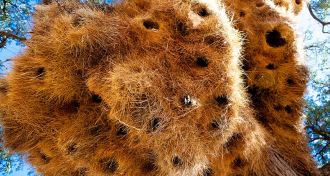
Extreme bird nests bring comforts and catastrophe
Extreme bird nests of Southern Africa’s weaverbirds offer condo living in tough temperatures.
- Health & Medicine
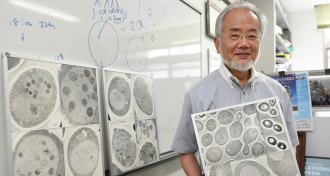
Deciphering cell’s recycling machinery earns Nobel
The 2016 Nobel Prize in physiology or medicine was awarded to Yoshinori Ohsumi for his work on autophagy, a process that cells use to break down old parts for future use.