Humans
We summarize the week's scientific breakthroughs every Thursday.
- Health & Medicine
Spit test could provide early warning of head, neck cancers
A new study shows that signs of head and neck cancer can be detected in saliva and blood plasma even before tumors are clinically diagnosed.
- Animals
When baboons travel, majority rules
GPS study suggests baboons use simple rules to resolve travel disputes without leaders.
- Anthropology
Kennewick Man’s DNA links him to present-day Native Americans
Genetic analysis of Kennewick Man suggests that the ancient Pacific Northwest man was most closely related to modern Native Americans, not Polynesians.
- Health & Medicine
Curtailing calories on a schedule yields health benefits
Eating an extreme low-calorie diet that mimics fasting just a few consecutive days a month may yield a bounty of health benefits, research suggests.
- Health & Medicine
Antibiotics can treat appendicitis
Antibiotics can successfully treat the majority of cases of a type of appendicitis, researchers find.
- Health & Medicine
Rehab for psychopaths
Psychopaths often don’t fit movie stereotypes, but they share particular characteristics. New research shows that, contrary to popular thought, cognitive behavioral therapy can help some psychopaths stay out of prison.
- Health & Medicine
Antibiotics an alternative to surgery for appendicitis
Doctors could abandon routine surgery for uncomplicated cases of appendicitis, a new study suggests.
- Genetics
Pneumonia bacteria attacks lungs with toxic weaponry
Some strains of the bacteria that causes pneumonia splash lung cells with hydrogen peroxide to mess with DNA and kill cells, a new study suggests.
- Life
Aging: Nature’s way of reducing competition for resources
Aging may have developed in many species as a genetic mechanism to conserve future resources. If the controversial proposal is true, then scientists may be able to greatly extend life span by deactivating the machinery for aging embedded in our DNA.
- Health & Medicine
Unlike moms, dads tend not to coo in squeaky voices
American English-speaking moms dial up their pitch drastically when talking to their children, but dads’ voices tend to stay steady, a new study finds.
- Life
A protein variant can provide protection from deadly brain-wasting
If cannibalism hadn’t stopped, a protective protein may have ended kuru anyway.
- Anthropology
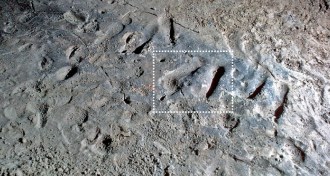
Modern-day trackers reinterpret Stone Age cave footprints
African trackers help researchers interpret ancient human footprints in French caves.