Life
We summarize the week's scientific breakthroughs every Thursday.
- Paleontology
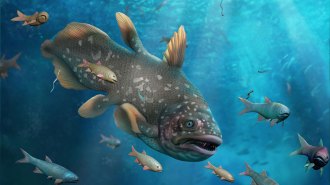
In the wake of history’s deadliest mass extinction, ocean life may have flourished
Ocean life may have recovered in just a million years after the Permian-Triassic mass extinction, fossils from South China suggest.
- Life
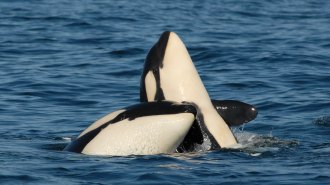
Orca moms baby their adult sons. That favoritism pays off — eventually
By sharing fish with their adult sons, orca moms may skimp on nutrition, cutting their chances of more offspring but boosting the odds for grandwhales.
- Health & Medicine
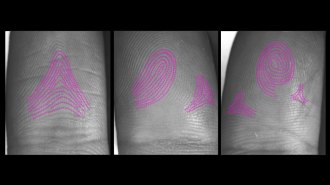
How fingerprints form was a mystery — until now
A theory proposed by British mathematician Alan Turing in the 1950s helps explain how fingerprint patterns such as arches and whorls arise.
- Microbes
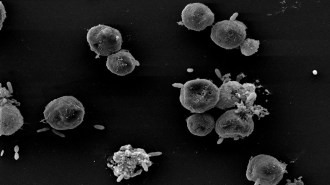
Some ‘friendly’ bacteria backstab their algal pals. Now we know why
The friendly relationship between Emiliana huxleyi and Roseobacter turns deadly when the bacteria get a whiff of the algae’s aging-related chemicals.
- Life
Mammals that live in groups may live longer, longevity research suggests
An analysis of nearly 1,000 mammal species reveals that the evolution of mammals’ social lives and life spans could be linked.
- Animals
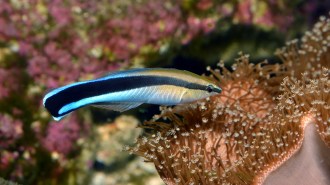
Fish can recognize themselves in photos, further evidence they may be self-aware
Cleaner fish recognize themselves in mirrors and photos, suggesting that far more animals may be self-aware than previously thought.
- Animals
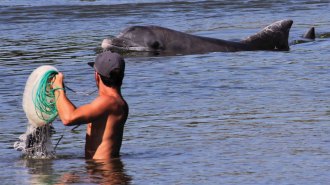
Here are 3 people-animal collaborations besides dolphins and Brazilians
Dolphins working with people to catch fish recently made a big splash. But humans and other animals have cooperated throughout history.
- Life
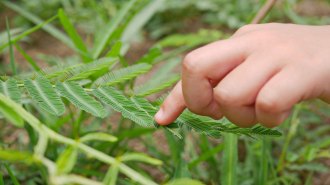
How plant ‘muscles’ fold up a mimosa leaf fast
A mimosa plant revs up tiny clumps of specially shaped cells that collapse its leaflets, though why isn’t clear.
- Animals
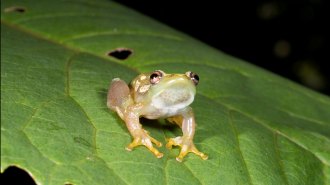
A newfound ‘croakless’ frog may communicate via touch
A newly discovered frog species in Tanzania joins a rare group of frogs that don’t croak or ribbit.
- Animals
Are your cats having fun or fighting? Here are some ways to tell
Certain behaviors indicate if your cats’ interaction is friendly, aggressive or something in between, a new study finds.
- Life
76 percent of well-known insects fall outside protected areas
Protected areas can provide safe havens for insects, but many existing ones fall short, a new study finds.
- Science & Society
Here are 7 new science museums and exhibitions to visit in 2023
The Grand Egyptian Museum is slated to open, as well as new exhibitions dedicated to space travel, the Galápagos Islands and more.